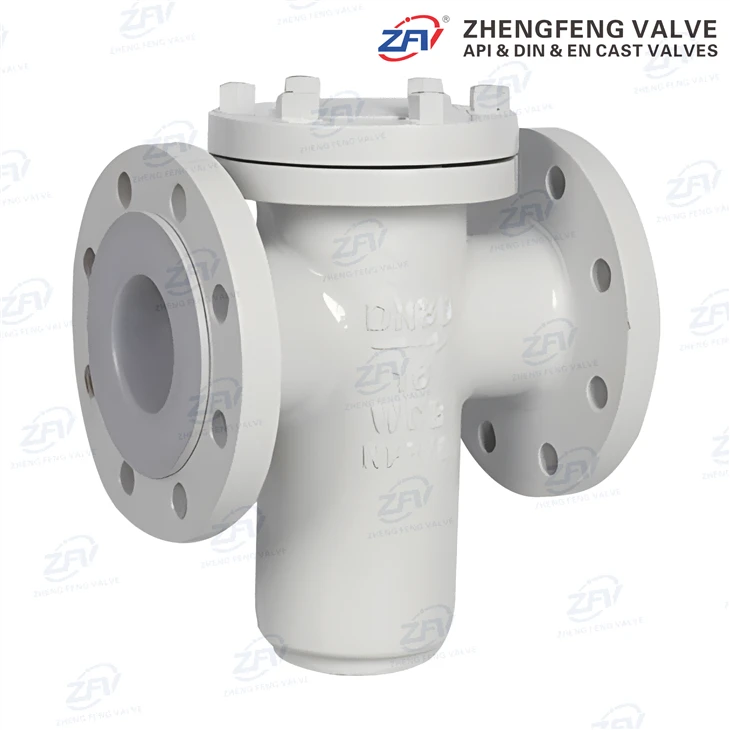
Strainer

Industrial Strainers: Engineered Protection for Critical Equipment


We manufactures high-performance industrial strainers designed to remove solids from flowing fluids, protecting your pumps, meters, heat exchangers, and control valves from costly damage. We focus on Maximum Debris Retention with Minimum Pressure Drop, ensuring your system maintains peak energy efficiency.


Technical Specifications


Parameter

Specification

Strainer Types

Y-Type, Simplex Basket, Duplex (Twin), T-Type

Size Range

1/2" – 48" (DN15 – DN1200)

Pressure Class

ASME Class 150 – 2500 / PN10 – PN420

Body Materials

WCB, LCB, CF8M (SS316), Duplex Steel, Monel, Hastelloy

Screen Options

Perforated Plate or Mesh (20 to 400 mesh) with SS316 as standard

Design Standards

ASME B16.34, ASME VIII, API 598


Product Classification
01.

Y-Type Strainers

The most compact and cost-effective solution for high-pressure gas, steam, or liquid lines.

02.

Simplex Basket Strainers

Featuring a larger storage capacity than Y-types, these are preferred for liquid systems with a higher concentration of debris, allowing for longer intervals between cleanings.

03.

Duplex (Twin) Strainers

Engineered for Zero-Downtime. Featuring two separate baskets with a diversion valve, allowing for screen cleaning while the system remains fully operational.

04.

T-Type Strainers

A versatile, large-bore solution offering the lowest possible pressure drop.


Engineering Highlights


Quick-Opening Covers

To minimize maintenance downtime, we offer Swing-Bolt and Quick-Release covers that allow for basket removal in under a minute without special tools.

Custom Filtration Precision

From 2-inch perforated plates for large debris to 400-mesh fine linings for delicate instruments, we tailor the filtration level to your specific downstream requirements.

API Standard Basket Strainer


Quality Assurance

Hydrostatic Testing

100% of our strainer bodies are pressure tested per ASME B16.34 to ensure shell integrity.

Material Traceability

All units are supplied with EN 10204 3.1 Material Test Reports (MTR), verifying heat numbers and metallurgy.

Corrosion Protection

Optional FBE (Fusion Bonded Epoxy) or rubber linings for seawater and highly corrosive chemical services.


Our Certificate

 
2022101210520757853b3ccf1d4dcb883e3de3cc1e508a.jpg (270×359)
20221012105217888ac55b3c9b44a69f407edba776fbe0.jpg (270×359)
2022101210522550033e75c5064491a985902ff025e755.jpg (270×359)
202210121052321f12cf27c6624f3984acfa28228b3bf0.jpg (270×359)
202210121052385c8d3b594d4244cbb2ed4161044c6da8.jpg (270×359)
20221012105243630c9b39bebd441da63cc054a0145291.jpg (270×359)
productcate-1-1
202210121052563e188df0bb5340578677078e5774c818.jpg (270×359)


FAQ


Q: What is the primary purpose of a strainer in a piping system?

A: A strainer is a "protection" device designed to mechanically remove solids from flowing liquids, gases, or steam. Its primary role is to protect expensive downstream equipment—such as pumps, control valves, meters, and heat exchangers—from damage caused by pipeline scale, rust, or debris.

Q: When should a Duplex (Twin) Strainer be specified?

A: A Duplex Strainer should be used in systems that require continuous 24/7 operation. It consists of two separate chambers and a diversion valve; when one side is full of debris, the flow is switched to the other chamber, allowing the operator to clean the first basket without shutting down the entire system.

Q: How does a strainer affect system pressure drop?

A: Every strainer introduces some resistance to flow. As the screen becomes clogged with debris, the pressure drop increases. Engineers must ensure the initial clean pressure drop is within acceptable limits to avoid overworking pumps and wasting energy.

Q: Can a Y-Strainer be installed in a vertical pipe?

A: Yes, but only if the flow is moving downward. This ensures that the debris is collected in the "leg" of the Y-pattern by gravity. If installed in a vertical pipe with upward flow, the debris would fall back into the main pipe when the flow stops.

Q: What is a "Blow-off" connection on a strainer?

A: A blow-off connection is a threaded or flanged port in the strainer cap. By installing a valve on this port, operators can flush out the collected debris using the system's own pressure without opening the strainer cover, significantly reducing maintenance time.

Q: How often should a strainer screen be cleaned?

A: Cleaning frequency depends on the "dirtiness" of the media. The best practice is to install differential pressure gauges across the strainer. When the pressure difference reaches a pre-set limit (typically 5-10 psi), it indicates the screen is clogged and requires immediate cleaning.

We're well-known as one of the leading strainer manufacturers and suppliers in China. With abundant experience, we warmly welcome you to buy bulk advanced strainer from our factory. If you have any enquiry about cooperation, please feel free to email us.

strainer, API Standard Basket Strainer, Forged Steel Y type Strainer

(0/10)

clearall